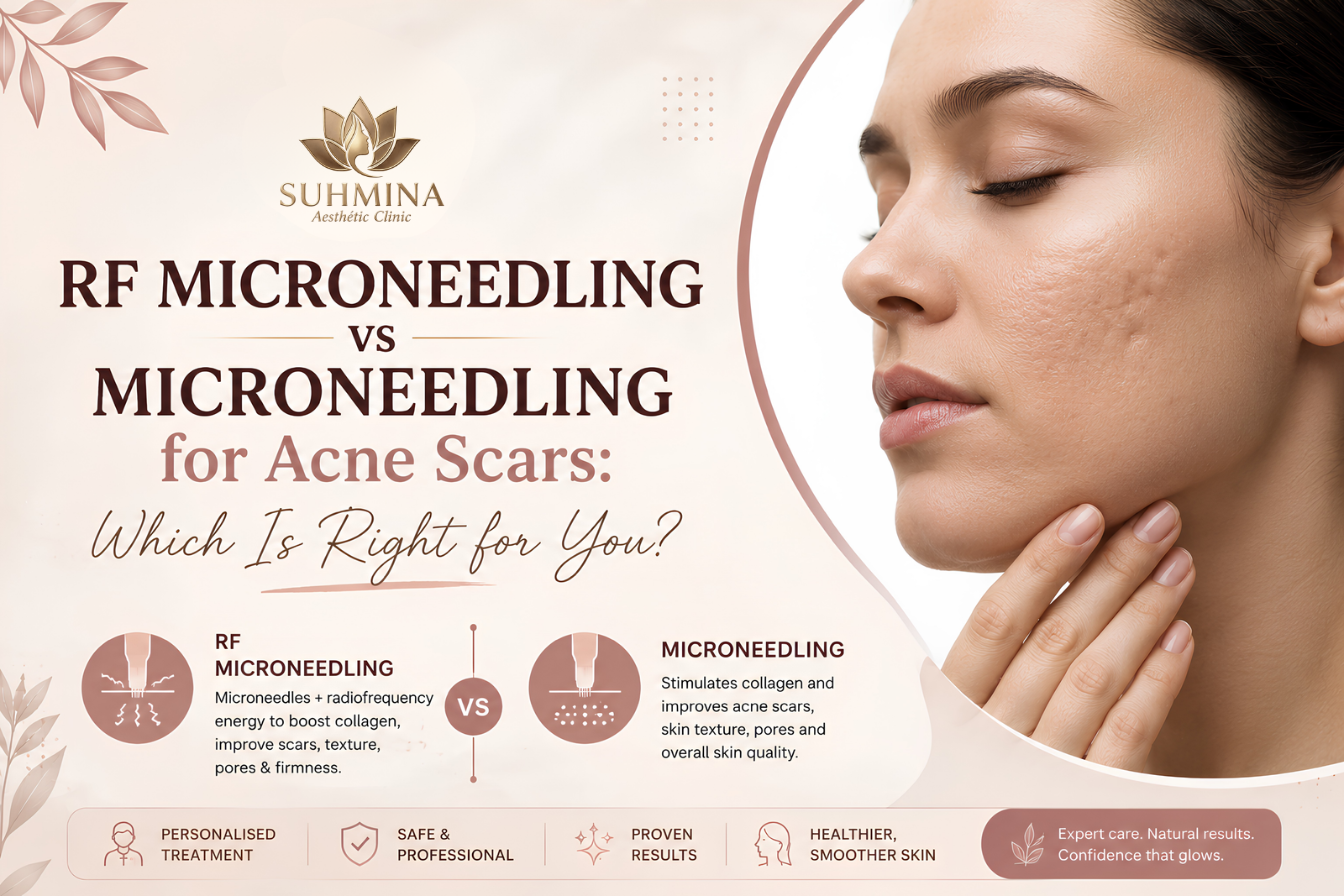
RF vs traditional microneedling for acne scars, explained simply — what each treatment does, who it suits, and the UK safety checks worth knowing before you book.
If you've spent any time searching "RF microneedling vs microneedling," you've probably landed on the same conversations we did — Reddit threads full of people asking whether the radiofrequency version is really worth the extra cost, and more than a few comments warning about "horror stories." So before you book anything, here's a clear, honest breakdown of what each treatment actually does, what's worth worrying about, and how to figure out which one fits your skin.
Traditional Microneedling: The Basics
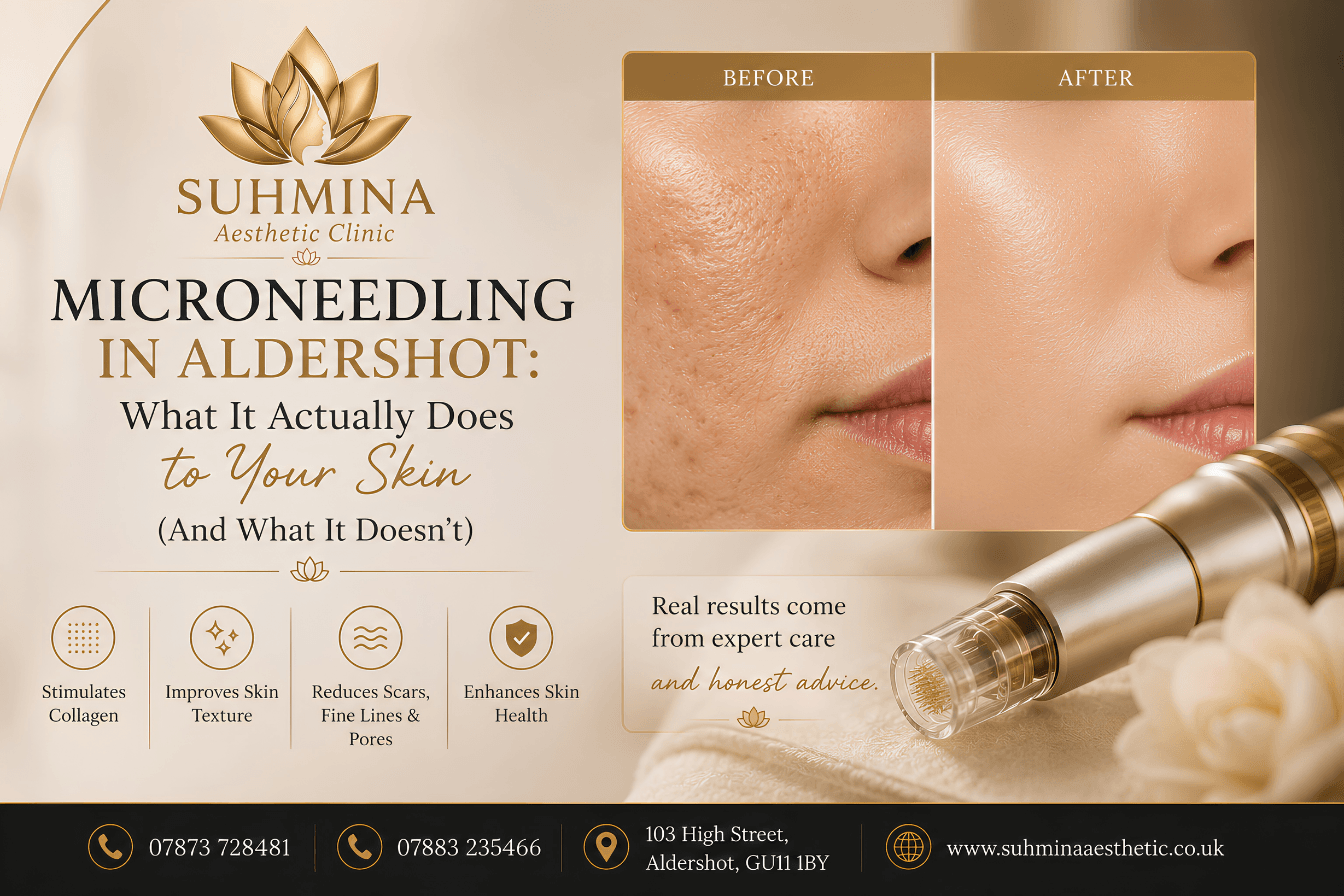
Traditional microneedling uses fine needles to create controlled micro-injuries in the skin. That triggers your body's natural wound-healing response, which means more collagen and elastin production over time. It's well suited to mild-to-moderate scarring, enlarged pores, fine lines, and general texture concerns — and because it doesn't involve heat, downtime is typically shorter.
RF Microneedling: What's Different
RF (radiofrequency) microneedling adds a second layer to the same needle-based approach: as the needles penetrate the skin, they also deliver radiofrequency energy beneath the surface. That extra thermal component is designed to reach deeper into the dermis, which is why it's often recommended for deeper, pitted acne scars, moderate skin laxity, and more stubborn texture issues that haven't responded well to standard microneedling.
The Real Question People Are Asking
Reading through patient discussions, the debate rarely comes down to "which works better" in the abstract. It's more specific than that. People want to know whether RF is worth roughly double the price of standard microneedling for their particular scarring. They want to know if the pain and downtime are really that different. And a recurring worry — especially for anyone treating the lower face or jawline — is whether RF energy can cause unwanted fat loss or sagging if the settings aren't right.
That last concern isn't just internet anxiety. It's grounded in something real, and it's worth taking seriously.
A Safety Note Worth Reading Before You Book
The British Cosmetic Dermatology Group is clear on this: RF microneedling should only be carried out by consultant dermatologists or other appropriately trained medical professionals, in a regulated clinical setting — and severe risks and complications can occur when these devices are used by untrained individuals. A proper face-to-face consultation beforehand isn't optional; it's how your practitioner assesses your skin type, goals, and medical history, and talks you through the real risks, downtime, and aftercare.
It's also worth knowing that microneedling in the UK isn't tied to a single statutory register the way some medical procedures are — in practice, anyone can currently offer it, regardless of training. That makes checking who you're booking with more important, not less. Look for a practitioner registered with Save Face (the government-approved register for non-surgical aesthetics) or the Joint Council for Cosmetic Practitioners (JCCP), and ideally treated from a CQC-regulated premises where that applies.
The takeaway isn't that RF microneedling is unsafe. It's that who performs it, and how carefully they calibrate depth and energy for your skin, matters more than the technology itself. This is exactly why RF microneedling should only ever be done by a properly trained, accredited provider — never at home, and never somewhere that treats it as a quick add-on rather than a proper medical procedure.
Which Treatment Is Right for Your Scars?
- Mild, superficial scarring or early-stage texture concerns: traditional microneedling is often enough, with less downtime and lower cost.
- Deeper, pitted, or long-standing acne scars: RF microneedling can reach further into the dermis, but only makes sense with a provider who properly assesses your skin type, scar depth, and treatment history first.
- Sensitive skin, active breakouts, or uncertainty about which category you fall into: this is exactly what a proper in-person consultation is for — not a guess based on what worked for someone else online.
Our Approach at Suhmina Aesthetic Clinic
We don't believe in defaulting every client to the more expensive option. Your scarring, skin type, and goals decide which treatment — or combination — makes sense, and that decision is made in person, not before we've actually assessed your skin.
If acne scarring is something you'd like an honest opinion on, take a look at our scar treatment page or book a consultation with our team in Aldershot.
Ready to Book Your Consultation?
Schedule a personalized consultation with our experts and discover the best treatment plan for your unique skin goals.