Microneedling has become one of the most talked-about skin treatments in aesthetics. But there's a lot of confusion about what it actually does — and what it doesn't. Let's clear that up.
Microneedling has had quite a journey from niche treatment to mainstream conversation. A few years ago it was the preserve of skincare enthusiasts who'd done extensive research. Now it comes up in almost every consultation where a patient is concerned about skin texture, scarring, or early signs of ageing.
The problem is that along the way, a lot of oversimplified and occasionally inaccurate information has spread alongside it. So let's talk about what microneedling actually does — and just as importantly, what it doesn't.
The Basic Principle
Microneedling works by creating controlled micro-injuries in the skin using very fine needles. These tiny punctures trigger the skin's natural wound-healing response — which involves the production of collagen and elastin to repair the treated area.
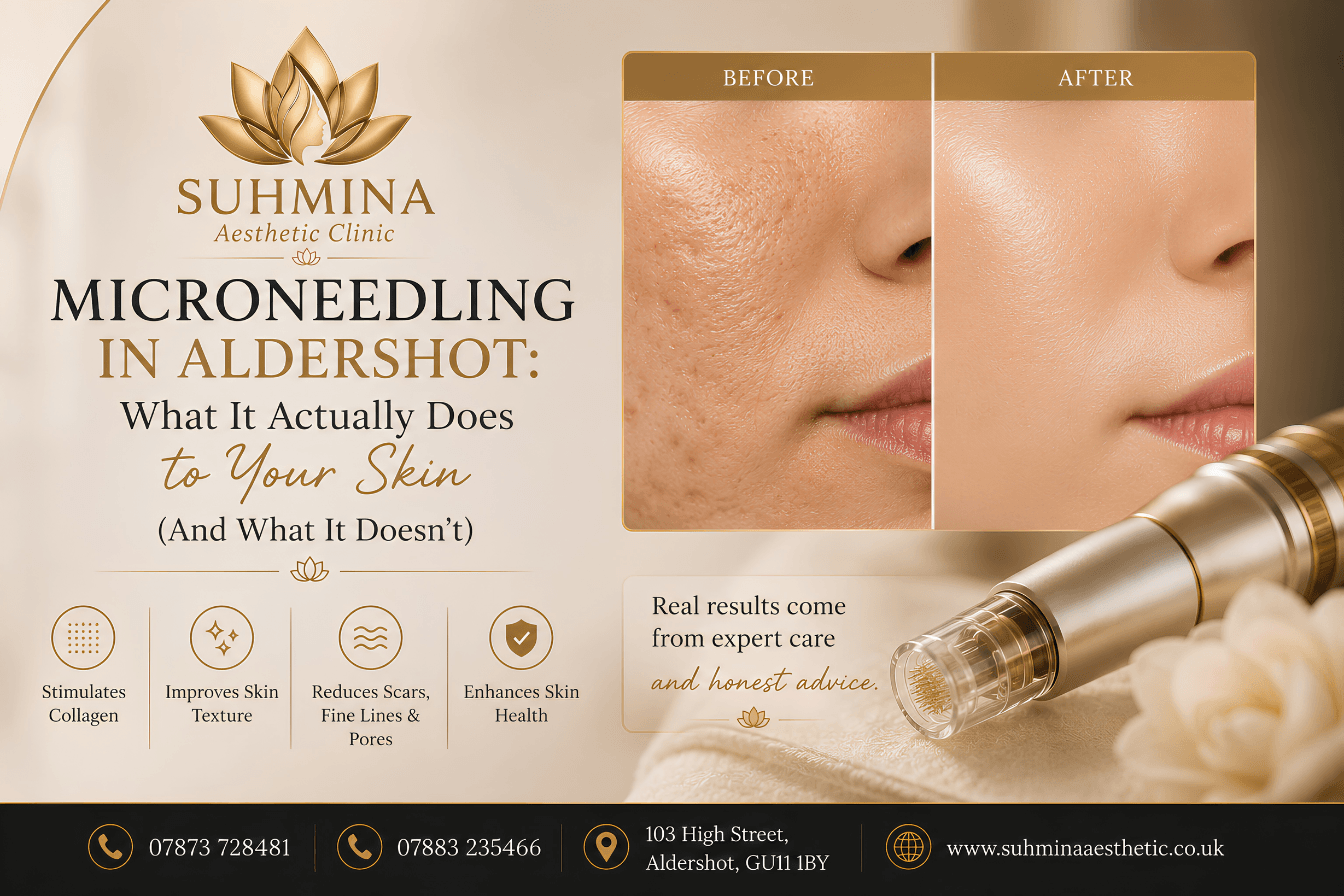
Over a series of treatments and the weeks that follow, this stimulated collagen production gets to work. It improves skin texture, reduces the appearance of scarring (including acne scars), softens fine lines, and tightens mildly lax skin. The results are gradual and cumulative — not immediate.
This is important to understand upfront. Microneedling is not a treatment where you walk out looking transformed. In fact, immediately after treatment your skin will look red and feel warm — a bit like mild sunburn. The improvement happens over the following weeks as the collagen remodelling process works beneath the surface.
What Microneedling Is Good For
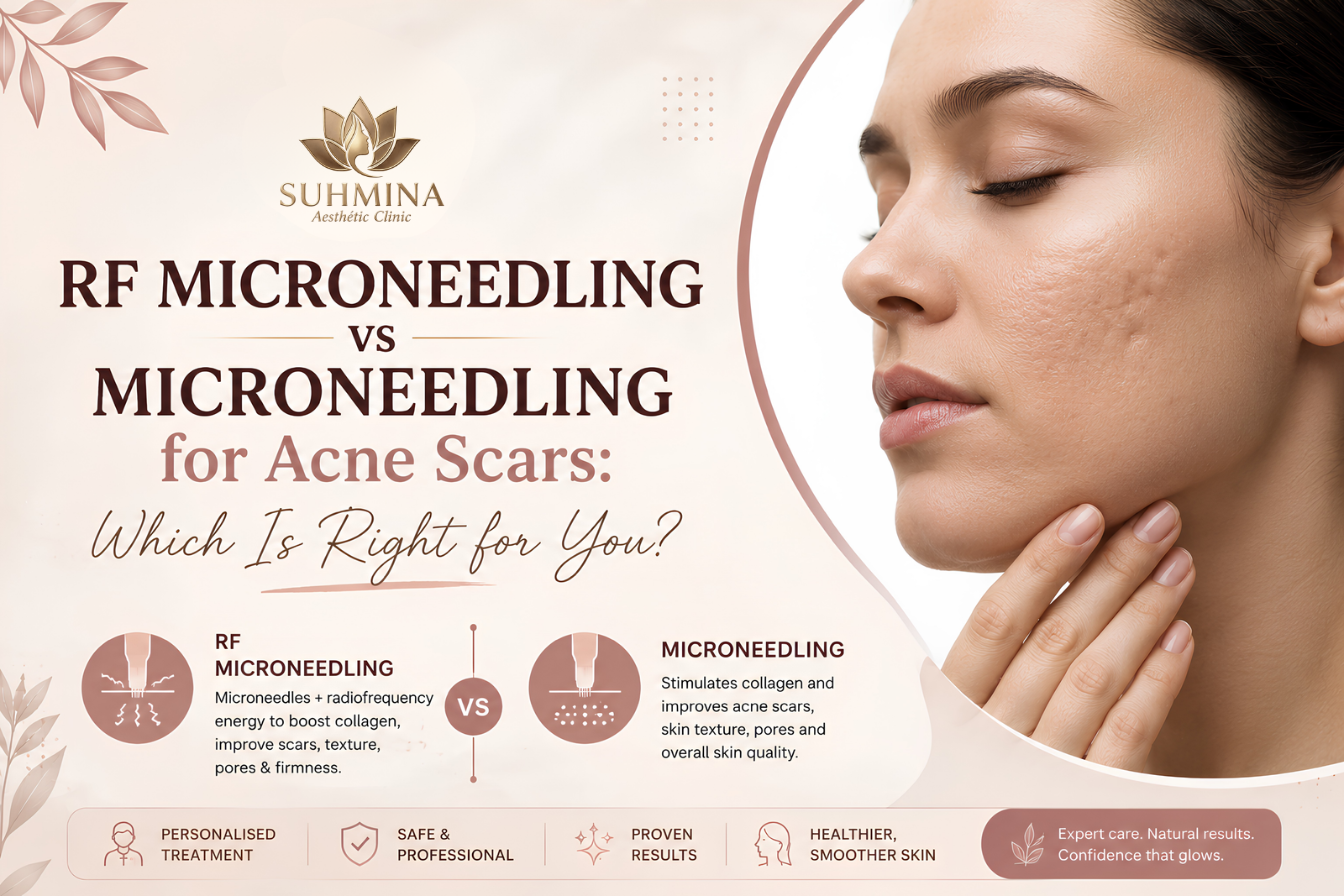
Microneedling is genuinely effective for several specific concerns. Acne scarring — particularly the shallow, pitted type called atrophic scarring — responds well to a course of microneedling treatments. Skin texture irregularities, enlarged pores, and early fine lines also improve noticeably. It's also used effectively to enhance the absorption of topical serums applied during or after treatment. The micro-channels created allow active ingredients to penetrate more deeply than they otherwise would.
It works across all skin tones, which is a significant advantage over some laser treatments that require more careful selection for darker skin.
What Microneedling Won't Do
This is where it's important to be honest. Microneedling won't significantly lift loose, sagging skin — that requires more structural intervention. It won't dramatically reduce deep, severe acne scars in a single treatment (or even three). It won't address significant pigmentation concerns as effectively as targeted laser treatments. And it won't replace the structural restoration that dermal fillers provide.
The best results from microneedling come when patients understand that it's a skin quality treatment. It works best as part of a broader approach to skin health rather than as a single-fix solution.
How Many Sessions Do You Need?
For general skin quality improvement, most patients see meaningful results after 3 sessions spaced 4 to 6 weeks apart. For acne scarring, 4 to 6 sessions is typically more appropriate — though the final outcome depends significantly on the depth and type of scarring present.
Results continue to improve for several months after completing a course, as the collagen remodelling process continues beneath the surface. Many patients then choose to have a maintenance session once or twice a year to sustain their results.
If you'd like to discuss whether microneedling is right for your skin concerns, book a consultation at our Aldershot clinic here.
Ready to Book Your Consultation?
Schedule a personalized consultation with our experts and discover the best treatment plan for your unique skin goals.