Looking for skin brightening treatments in the UK? Compare the options with real evidence behind them, understand the regulator warnings on glutathione drips, and see what treatment costs in Aldershot.
Dull, uneven or sun-marked skin sends thousands of people searching for skin brightening treatments every month. However, not every option is equal. Some have solid evidence behind them, while others, such as glutathione drips, carry serious regulatory warnings. This guide explains what brightening really means, which treatments work, and what to ask before you book.
What Does "Skin Brightening" Actually Mean?
Skin brightening aims to restore radiance and even out tone. It targets dullness, sun spots, post-acne marks and melasma-type pigmentation. It does not change your natural skin colour, and a good clinic will never promise that. In short, you are treating pigment and texture, not your skin tone.
Skin Brightening Treatments With Evidence Behind Them
- Chemical peels: controlled acids lift surface pigment and speed up renewal. Different acids suit different concerns.
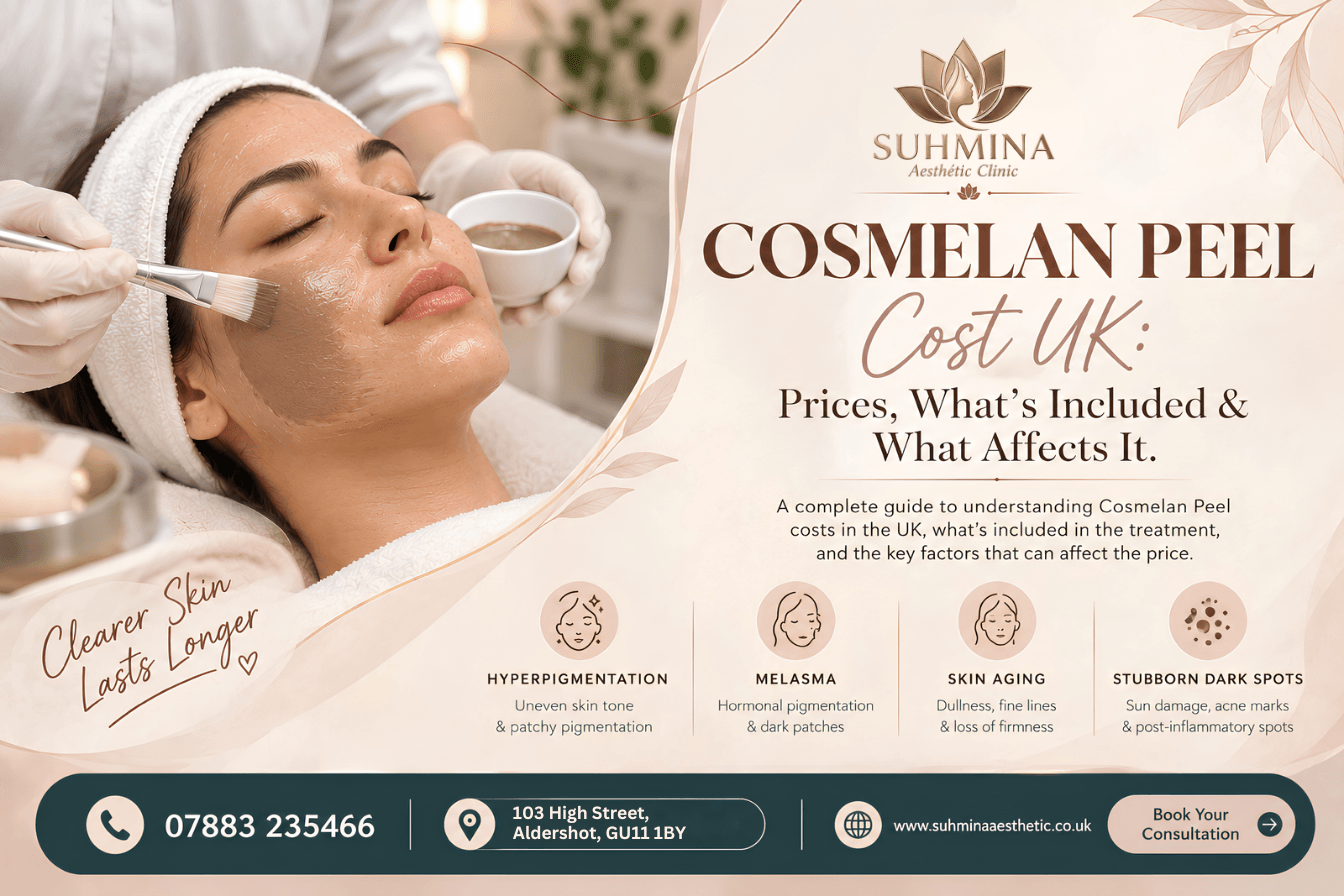
- Cosmelan depigmentation: a two-phase protocol for stubborn melasma and sun damage, supported by home care.
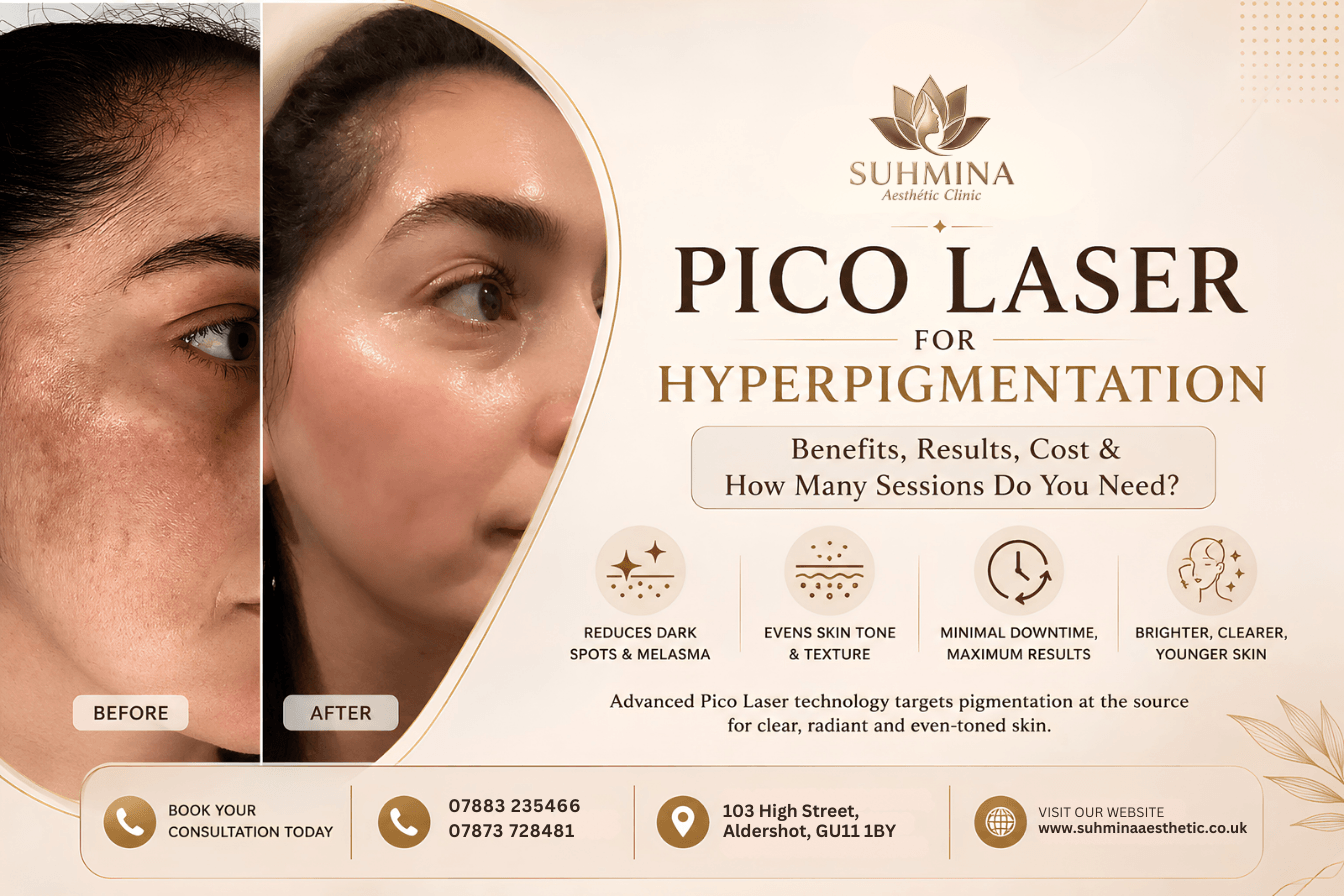
- Pico and carbon laser: light-based treatments that target pigment, chosen carefully for your skin type.
- Microneedling with brightening actives: stimulates renewal and improves texture alongside tone.
- Daily SPF and home care: sun protection prevents pigment returning, so it matters as much as any treatment.
Most pigmentation needs a course, not one session. A tailored plan, combined with strict sun protection, usually works better than a single treatment.
Skin Brightening Treatment Costs in Aldershot
At Suhmina Aesthetic Clinic, indicative prices are:
- Chemical peels: from £149
- Carbon laser: £149
- Pico laser: £349
- Cosmelan depigmentation: £999
- Microneedling: from £99
We confirm a realistic plan and total at your consultation, before you commit.
Glutathione Drips: What You Should Know First
Glutathione drips are heavily marketed for skin brightening. Before you consider one, read what UK regulators say. The Joint Council for Cosmetic Practitioners (JCCP) advises that injectable glutathione should not be used for cosmetic purposes, including skin brightening, without a clinical diagnosis and therapeutic indication. The MHRA has also said that some injectable glutathione products have no UK marketing authorisation.
In 2025, Trading Standards issued a public warning after a Channel 4 News investigation found these drips offered for skin lightening at hundreds of UK salons. Reported problems include severe allergic reactions, kidney strain and infections. There is also no scientific consensus that the treatment is safe or effective for this use.
Topical products are different. Cosmetic serums that contain glutathione sit in a separate category. Even so, they work on the surface and will not change your skin tone dramatically.
If anyone offers you a drip for skin brightening, ask for full written information about the product, its licensing status and the risks. Also ask what happens if you react badly. If the answers are vague, walk away.
How to Protect Your Results
- Wear SPF 30 or higher every day. Reapply when outdoors.
- Use gentle, barrier-supporting skincare. Avoid harsh scrubs while your skin heals.
- Avoid picking or peeling skin. Picking can trigger new marks.
- Follow your aftercare plan. Consistency drives results.
Skin Brightening FAQs
Q. Is glutathione safe?
Ans. Glutathione occurs naturally in the body, but regulators warn against injectable glutathione for cosmetic use. Speak to your GP before considering it.
Q. Are glutathione drips good for your skin?
Ans. There is limited evidence that they brighten skin, and the JCCP does not support cosmetic use. Proven options include peels, lasers and daily SPF.
Q. Is skin whitening permanent?
Ans. No. Pigment can return with sun exposure or hormonal changes, so ongoing sun protection and maintenance matter.
Q. What is the best treatment for hyperpigmentation?
Ans. It depends on the type and depth of pigment. A skin assessment helps choose between peels, lasers and Cosmelan.
Q. Can brightening treatments change my natural skin tone?
Ans. No. They target dullness and dark marks, not your natural colour.
Q. Are brightening treatments safe for darker skin?
Ans. They can be, with the right protocol. Darker skin carries a higher risk of pigmentation rebound, so careful assessment matters.
Q. How many sessions will I need?
Ans. Most pigmentation concerns need a course. We confirm a realistic plan at your consultation.
Conclusion
The best skin brightening treatment is the one that matches your skin, your concern and your lifestyle, with honest expectations. Explore our pigmentation treatments, chemical peels, Cosmelan depigmentation and microneedling, then check current prices. Your free consultation is secured with a £20 deposit, fully refundable on request.
Ready to Book Your Consultation?
Schedule a personalized consultation with our experts and discover the best treatment plan for your unique skin goals.