What pico laser actually does for hyperpigmentation and melasma — where it works brilliantly, where real patients say it's backfired, and what to expect from a course at our Aldershot clinic.
We get asked about pico laser more than almost any other pigmentation treatment right now, and honestly, most of what's floating around online is either pure marketing gloss or scare stories from someone's bad experience. Neither one tells you the whole picture. So here's the version we'd actually give a friend who asked us over coffee.
We see pigmentation clients travel in from right across the area — Aldershot, Farnborough, Farnham, Fleet, Camberley, Frimley, Ash, and the wider Hampshire and Surrey border. It's one of the most common things people come to see us about, and pico laser is usually near the top of the conversation.
What Is a Pico Laser, Really?
Older lasers mostly work by heating pigment until it breaks apart — effective, but that heat has to go somewhere, and "somewhere" is often the surrounding skin. A pico laser gets around this by firing in picoseconds (trillionths of a second), which creates a tiny pressure wave that shatters pigment mechanically instead of cooking it. Less heat means less collateral damage, and — the bit that actually matters most — a much lower chance of the treatment triggering new pigmentation as a side effect.
Once the pigment's broken down into fragments small enough for your body to deal with, your own immune system quietly clears it away over the following weeks. You won't walk out looking perfect on the day. The real results build gradually.
What It's Genuinely Good At
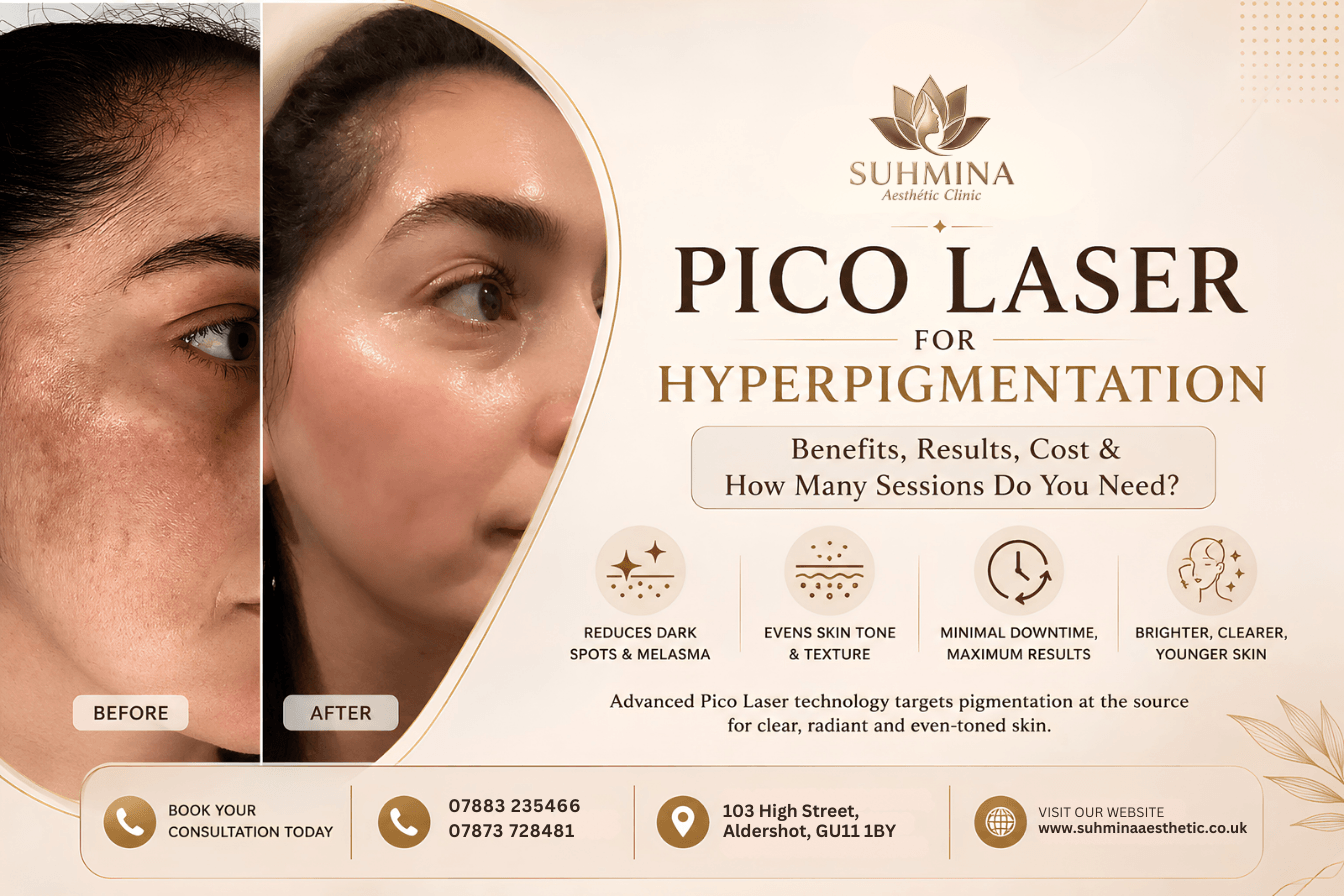
Sun spots, age spots, freckles you'd rather have faded than gone completely, and the dark marks acne leaves behind — pico laser handles all of these well, often with a noticeable difference after just one or two sessions.
The Melasma Conversation, Honestly
Now for the bit we won't gloss over. Melasma isn't a sun spot. It's driven by hormones, and it's notoriously reactive to inflammation of any kind — including the small amount a laser causes, however gentle. That's exactly why you'll find people online swearing pico laser cleared melasma they'd fought for years, sitting right next to just as many saying it made theirs spread or come back darker than before.
Both are telling the truth about their own experience. What usually separates the two outcomes is the energy setting used, whether sessions were spaced properly, and whether the skin was already irritated going in. A gentle, low-energy approach — sometimes called toning, where the whole area is treated softly rather than targeting individual patches aggressively — tends to be a much safer route for melasma than trying to clear it quickly.
If melasma is what's bringing you in, we'll say this plainly at your consultation rather than after the fact: it needs a proper skin assessment first, not a quick booking. We often pair it with things like tranexamic acid or tyrosinase inhibitors and strict sun protection, rather than expecting the laser to do all the work alone. If you'd like some independent background on melasma itself, the British Association of Dermatologists' patient information leaflet is a solid, unbiased place to start.
What Actually Happens in a Session
Most people describe it as a quick series of snaps against the skin — sharp in the moment but over fast, and tolerable without numbing for most areas. If we're treating somewhere more sensitive, or a larger area, we'll apply topical numbing beforehand. Budget around 30 to 45 minutes including prep.
What Recovery Actually Looks Like
Straight after treatment, expect flushed skin, a bit like mild sunburn, and the pigment itself might look temporarily darker before it starts to fade — that's normal, and honestly a decent sign the treatment's working. A few people get pinpoint marks or slight puffiness for a day or so. Most of our clients are back to normal within 24 to 48 hours, just avoiding makeup, active skincare, and direct sun in the meantime.
Darker Skin Tones: Is It Actually Safe?
Yes, and it's genuinely one of the better options here. The low heat means a lower risk of triggering post-inflammatory hyperpigmentation compared with older laser technology, which historically made darker skin trickier to treat safely. That doesn't mean anything goes, though — settings still need tailoring to your Fitzpatrick type, and we always start conservative and adjust from there rather than running one setting for everyone.
How Long Until You See Something?
Sun damage and post-acne marks tend to shift fastest, often within one to three sessions. Melasma takes longer and needs patience, treated as an ongoing, gentler process rather than a quick fix. Most pigmentation plans run 3 to 6 sessions, spaced a few weeks apart, and we adjust as your skin responds.
Aftercare Is Not Optional
This is genuinely the part that decides whether your results stick. Daily SPF isn't a suggestion — one unprotected afternoon can undo weeks of progress, especially where melasma's involved. Skip retinoids and acids for about a week afterwards, and give saunas, hot showers, and hard workouts a miss for the first 48 hours while your skin settles.
What It Costs With Us
Pico laser sits within our Advanced Pigmentation & Brightening treatment at £349 a session, with the overall treatment starting from £150 depending on what your skin actually needs. You can see the full breakdown on our master price list. Every plan starts with a consultation with one of our Level 7 Qualified Aesthetic Nurses, because the right number of sessions depends on your skin, not a generic package. You can read more about who'll be assessing you on our experts page.
When We'd Say Hold Off
- Active acne, cold sores, or any skin infection in the area
- Recent sun exposure or a fresh tan — give it 4 to 6 weeks
- Pregnancy or breastfeeding
- A history of keloid scarring
- Recent isotretinoin use
- Expecting one session to erase everything — that's just not realistic, for anyone
Ready to Book Your Consultation?
Schedule a personalized consultation with our experts and discover the best treatment plan for your unique skin goals.