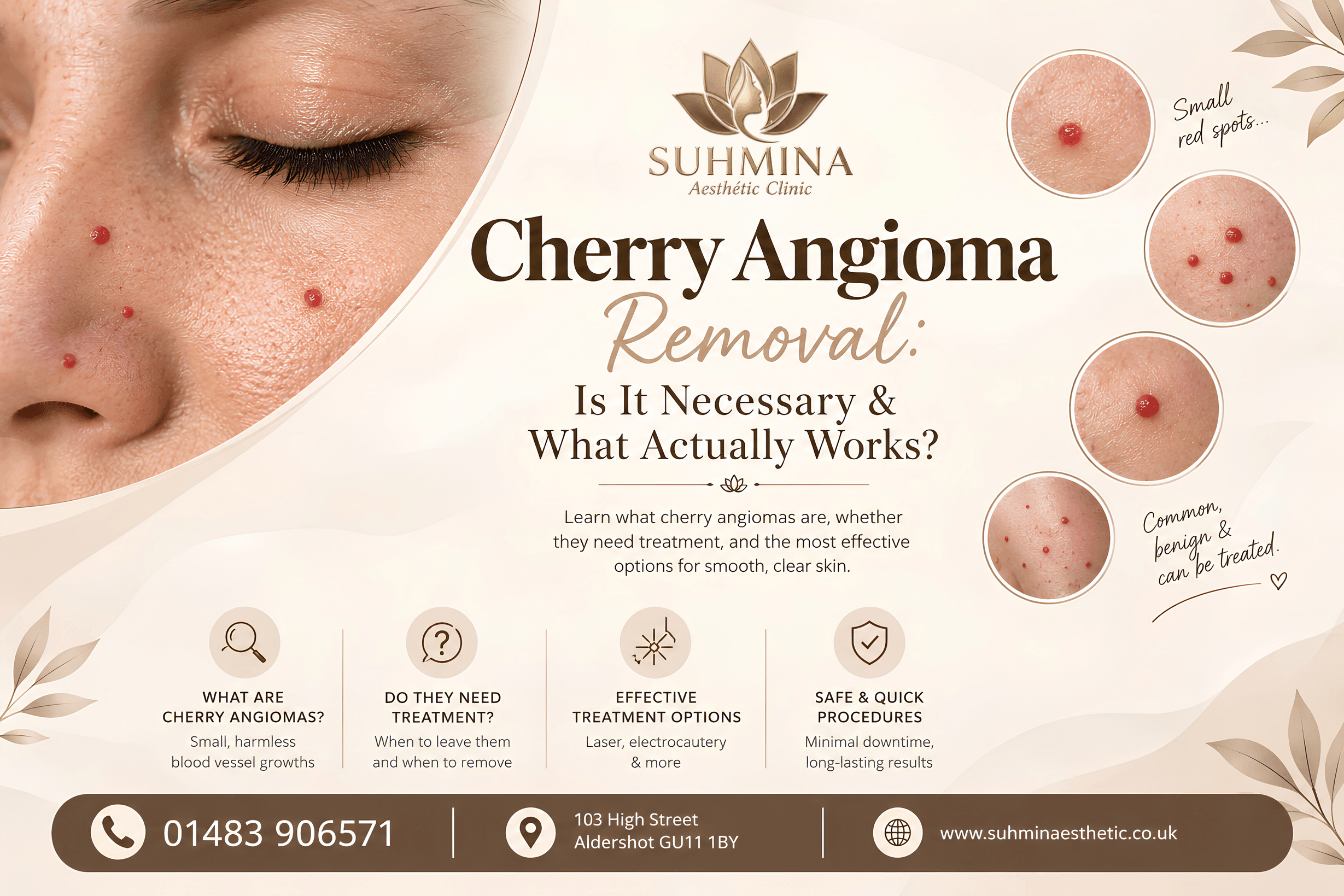
Those small red spots are almost always harmless — but if you're considering removal, here's what's genuinely necessary versus cosmetic, and which methods work.
Small, bright red spots appearing on your skin as you get older can feel alarming at first glance — but in the vast majority of cases, they're a completely harmless and common skin change called a cherry angioma. The real question most patients want answered isn't "what is this?" but "do I actually need to do anything about it?" This guide covers exactly that: whether removal is necessary, what genuinely works if you decide to go ahead, and — most importantly — when a spot like this deserves a proper medical check before any cosmetic treatment.
What Is a Cherry Angioma?
Cherry angiomas, sometimes called Campbell de Morgan spots, are small clusters of dilated blood vessels that appear as bright red, smooth or slightly raised bumps on the skin. They're extremely common, particularly from your thirties onwards, and tend to increase in number with age. The exact cause isn't fully understood, though they do tend to run in families.
Is Removal Actually Necessary?
Here's the honest answer: in the overwhelming majority of cases, no. Cherry angiomas are benign and don't pose a health risk, meaning removal is a cosmetic choice rather than a medical necessity. Most patients choose to have them removed simply because they don't like how they look, or because a spot sits somewhere that catches on clothing or jewellery and bleeds when irritated.
That said, removal becomes more of a practical consideration — rather than a purely cosmetic one — when a spot:
- Bleeds repeatedly due to friction from clothing or daily activity
- Sits somewhere that's constantly irritated or knocked
- Has changed noticeably in size, shape, or colour, or appeared very suddenly
That last point matters enormously, so it's worth its own section below.
What Actually Works: Removal Methods
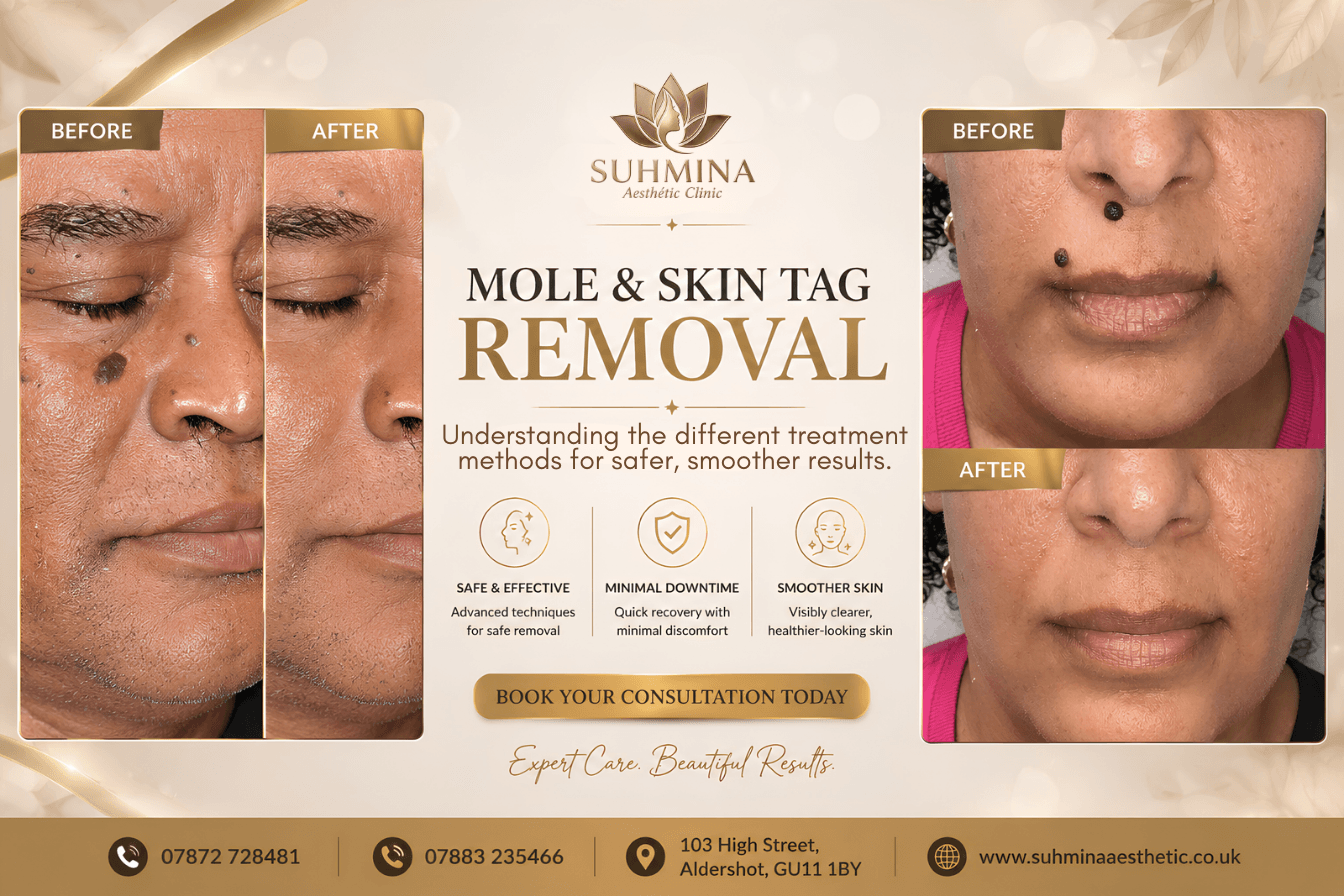
Once a spot has been properly assessed and confirmed as a straightforward cherry angioma, a few genuinely effective removal methods are commonly used:
- Electrocautery (thermocoagulation) — a fine probe delivers controlled heat to seal the dilated blood vessels beneath the skin. This is one of the most precise and widely used methods, targeting only the affected vessels with minimal impact on surrounding skin.
- Cryotherapy — the lesion is frozen, causing the treated tissue to break down and eventually flake away.
- Vascular laser treatment — targeted light energy is absorbed by the blood vessels within the lesion, causing them to collapse and fade over time.
The right method depends on the size, location, and number of spots being treated, which is exactly why a proper consultation — not a generic online guide — should guide your decision.
What to Expect During & After Treatment
Most cherry angioma removal sessions are quick, often taking just a few minutes per spot, with only mild discomfort during the procedure itself. A small scab typically forms at the treatment site within a few hours and usually flakes away naturally within 7 to 10 days. Most patients need just a single treatment per spot, though larger or more raised lesions occasionally require a follow-up.
When to See a GP First
This is the part no honest guide should skip. While cherry angiomas themselves are harmless, any skin lesion that appears very suddenly, changes in size, shape, or colour, becomes crusty, or bleeds without an obvious cause should be checked by a GP or dermatologist before any cosmetic treatment is considered. These changes can occasionally indicate a different skin condition that needs proper medical assessment rather than cosmetic removal. A reputable, clinically-led clinic will always ask about this history before treating a lesion — and should refer you back to your GP if anything looks uncertain.
Q. Do I need to remove a cherry angioma?
Ans. No, not medically. Cherry angiomas are benign, and removal is a cosmetic choice unless the spot repeatedly bleeds or is constantly irritated by friction.
Q. What is the most effective way to remove a cherry angioma?
Ans. Electrocautery, cryotherapy, and vascular laser treatment are all effective, precise methods. The right choice depends on the size and location of the lesion, best confirmed during a consultation.
Q. Does cherry angioma removal leave a scar?
Ans. When performed correctly by a qualified practitioner, scarring is uncommon. A small scab typically forms and flakes away within 7 to 10 days, leaving minimal to no visible mark.
Q. When should I see a GP instead of booking cosmetic removal?
Ans. If a spot has appeared very suddenly, changed in size, shape, or colour, or bleeds without an obvious cause, see a GP first to rule out any other underlying skin condition before considering cosmetic treatment.
Book a Skin Lesion Consultation in Aldershot
If you're in Aldershot, Farnborough, Fleet, Farnham, Camberley, Ash Vale, Alton, Hook, Woking, Basingstoke, Winchester, or Andover and considering cherry angioma removal, a proper consultation ensures the right method is used safely — and that anything worth a GP's attention is caught first.
Book a consultation with Suhmina Aesthetic Clinic, browse our full treatment range, see our price list, meet the team, or read more skin advice on our Journal.
Ready to Book Your Consultation?
Schedule a personalized consultation with our experts and discover the best treatment plan for your unique skin goals.