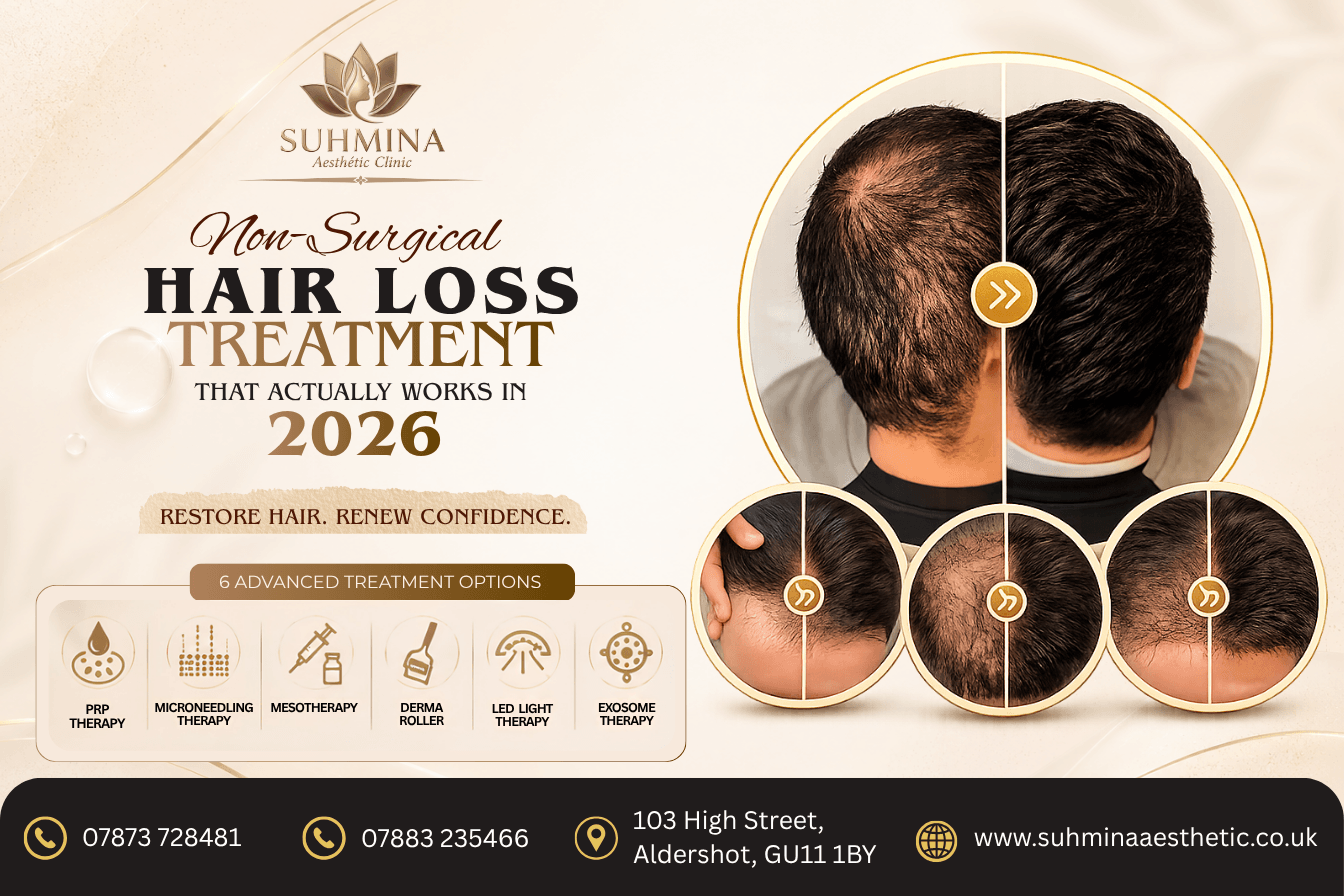
Surgery isn't the only option. Here's an honest breakdown of PRP, microneedling, mesotherapy, exosomes and more — what actually works, and what to know before you book.
Hair loss treatment has quietly become one of the biggest areas in aesthetics, and with that comes a lot of noise — six different acronyms, clinics claiming their version is the best, and no shortage of confusing marketing. So here's the honest version of what these treatments actually do, who they tend to work for, and what a realistic plan looks like.
We treat clients from right across Hampshire at our Aldershot clinic — Farnborough, Fleet, Basingstoke, Winchester, Southampton, Portsmouth, Andover, Eastleigh, Fareham and everywhere in between.
1. These Treatments Work Best on Early to Moderate Thinning
The honest starting point: non-surgical treatments work by supporting follicles that are still active, even if they're producing finer or fewer hairs than they used to. If an area has been completely bald for a long time, there's often nothing left there to stimulate, and a transplant is the more realistic route. We'll always tell you honestly at your consultation whether an area is likely to respond.
2. There Are Several Different Approaches
These get lumped together a lot, so here's what each one actually is:
- PRP Therapy — your own blood is processed to concentrate the platelets, which are then injected into the scalp to release growth factors around the follicles.
- Microneedling — fine needles create tiny channels in the scalp, which triggers a healing response and helps whatever's applied afterwards absorb more effectively.
- Mesotherapy — a series of fine injections placing active ingredients directly into the scalp, closer to the follicles than a topical product could reach.
- Derma Roller — a lighter, more accessible form of microneedling, often used between clinic sessions to keep momentum going.
- LED Light Therapy — red light delivered to the scalp. It won't burn or hurt, and while the exact mechanism isn't fully understood, it's thought to boost blood flow and cellular activity around the follicle. It needs consistent, regular use to have any chance of working.
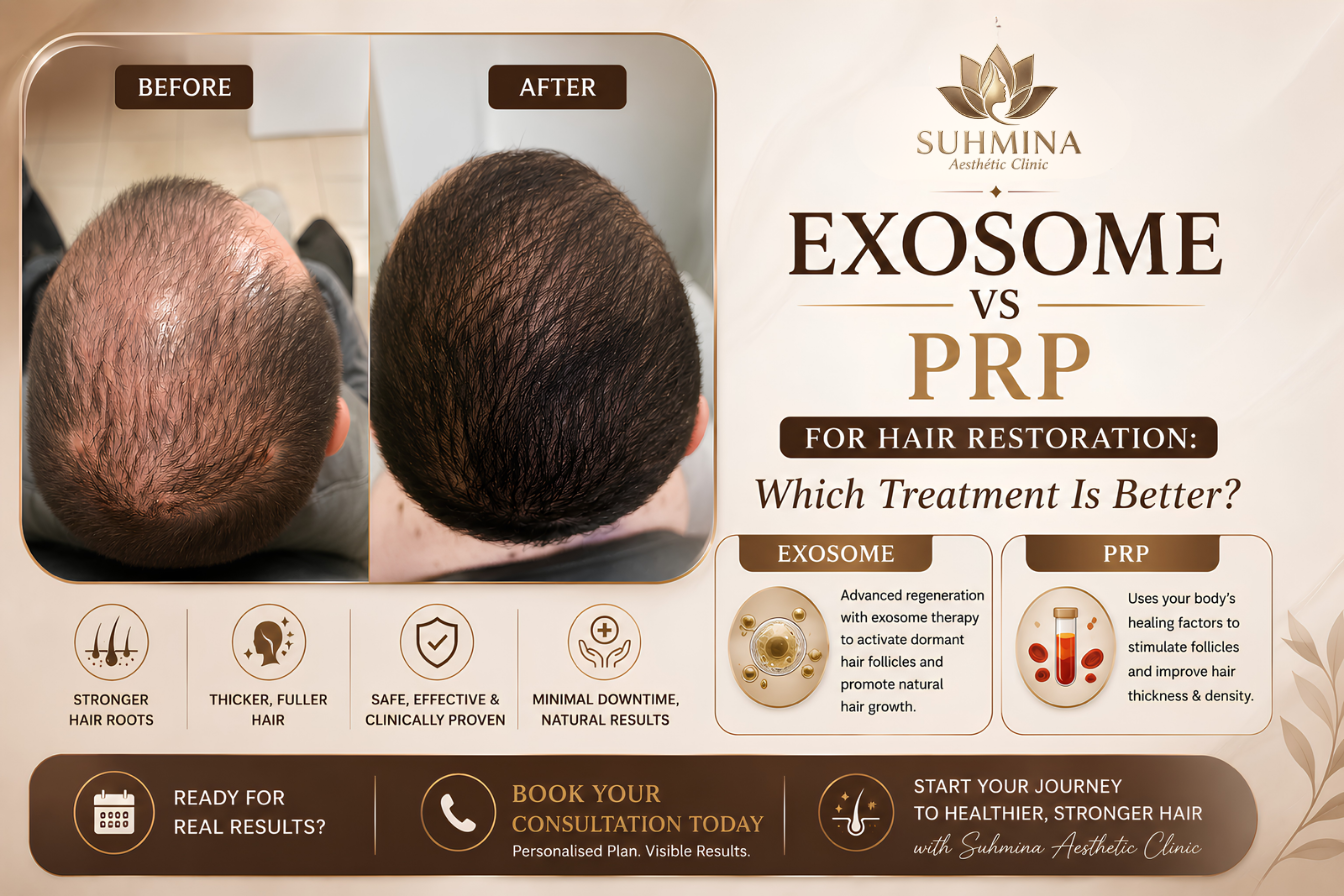
- Exosome Therapy — a newer option using concentrated signalling molecules to encourage follicle activity, usually delivered alongside microneedling to improve how well it's absorbed.
3. They're Often Combined, Not Used Alone
Microneedling paired with PRP or exosomes tends to work better than either on its own, simply because the microneedling helps the active ingredient reach where it needs to go. Your plan might use one treatment or a combination — that depends on what we find at your consultation, not a fixed package.
4. Not All Products Are the Same
This applies particularly to exosome treatments, where the source and quality of the product can vary quite a bit between clinics. It's a fair question to ask any provider, including us, where a product comes from and how it's sourced — a good clinic won't mind being asked.
5. They Support Growth — They Don't Treat the Root Cause
Most pattern hair loss is driven by a hormone (DHT) gradually shrinking follicles over time. PRP, mesotherapy and exosome treatments work by supporting and stimulating the follicles that are still there — they don't switch off that underlying hormonal process. If you're also using a prescribed treatment for hair loss, that's usually what's addressing the root cause, while what we offer in clinic supports density and follicle health alongside it. It's a distinction worth understanding before you book, rather than expecting one to replace the other.
6. Results Take Months, Not Weeks
Most people need a course of sessions rather than a one-off, typically spaced four to six weeks apart. Visible change tends to show up gradually from around eight to twelve weeks in, with fuller results building over several months as the hair cycle does its thing. Anyone promising overnight results is overselling.
7. Maintenance Is Usually Part of the Plan
Hair loss treatments generally aren't a one-and-done fix — most people come back for top-up sessions every six to twelve months to hold onto their results. We'll talk through what that looks like realistically for you, not just for the first course.
8. Ask for a Clear Quote Before You Commit to a Course
These treatments are usually sold as a course rather than a single session, and prices can vary a lot between clinics. Before you commit anywhere, ask exactly what's included — how many sessions, what happens if you need more, and what maintenance costs look like afterwards. A good clinic will be upfront about this rather than leaving you to work it out as you go, and we're happy to talk through it plainly at your consultation.
9. A Proper Consultation Should Ask Why You're Losing Hair, Not Just Book You In
Hair loss has a lot of possible causes — genetics, stress, hormonal changes, thyroid issues, low iron, certain medications, among others. If your hair loss has come on suddenly, is patchy, or comes with other symptoms, please see your GP before booking a cosmetic treatment, since it's worth ruling out anything that needs medical attention first. For the more common gradual thinning most people experience, we'll talk through your history at consultation so the plan actually fits your situation.
10. It Can Work Alongside Prescribed Treatments
If you're already using a prescribed hair loss medication, these treatments aren't an either/or — many people use both together, since they work in different ways. We'll talk through what you're currently using so we can build a plan around it.
Common questions
Q. Which treatment is right for me?
Ans. It depends on your pattern of hair loss, how long it's been going on, and what you've already tried. That's exactly what your consultation is for — we won't just offer you the most expensive option.
Q. Will this stop my hair loss for good?
Ans. It can slow shedding and support density, but it won't switch off the hormonal process behind most pattern hair loss. If you want to address the cause directly, that's usually a conversation about prescribed medication with your GP, alongside what we offer in clinic.
Q. Does it hurt?
Ans. Most people describe mild discomfort at most — a tingling or slight pinching sensation. Numbing cream is used where needed for injection-based treatments.
Q. How many sessions will I need?
Ans. Most courses run three to six sessions spaced four to six weeks apart, though this varies by treatment and how you respond.
Q. When will I see results?
Ans. Most people start noticing a difference from around eight to twelve weeks, with results continuing to build over several months.
Q. How much does it typically cost?
Ans. It depends on which treatment and how many sessions your plan needs. We'll give you a clear breakdown at consultation covering the full course, not just a per-session estimate.
Q. Do I need to keep having treatment forever?
Ans. To maintain results, yes, most people come back periodically — usually every six to twelve months — rather than needing constant sessions.
Q. Do these treatments work for women too?
Ans. Yes — hair thinning affects women as well as men, and all of these treatments are suitable for both.
Q. Will this work on an area that's completely bald?
Ans. It's less likely. These treatments support follicles that are still active, even if weakened. Long-bald areas usually need a different conversation, which we'll have honestly with you.
Other treatments you might be interested in
Or browse our full treatment list.
Let's talk about what's realistic for your hair
If your hair's been thinning and you're not sure where to start, come in and talk to us. We'll have an honest look, ask about your history, and tell you straight whether non-surgical treatment is likely to help — no pressure, no overselling.
Book a consultation at our clinic on the High Street in Aldershot — we welcome clients from right across Hampshire.
Non-Surgical Hair Loss Treatment in Hampshire | Suhmina Aesthetic Clinic PRP, microneedling, mesotherapy, exosomes and more — an honest guide to non-surgical hair loss treatment for clients across Hampshire. Book your consultation today.Ready to Book Your Consultation?
Schedule a personalized consultation with our experts and discover the best treatment plan for your unique skin goals.